A tobacconist's shelf is a wall of names — Nightcap, Full Virginia Flake, Early Morning Pipe — and behind the poetry sits a surprisingly short list of leaves. Learn four or five of them and the wall turns into a map. You will be able to guess what a tin tastes like before you open it, and you will know what to try next.
Virginia: Sweet, Bright and Patient
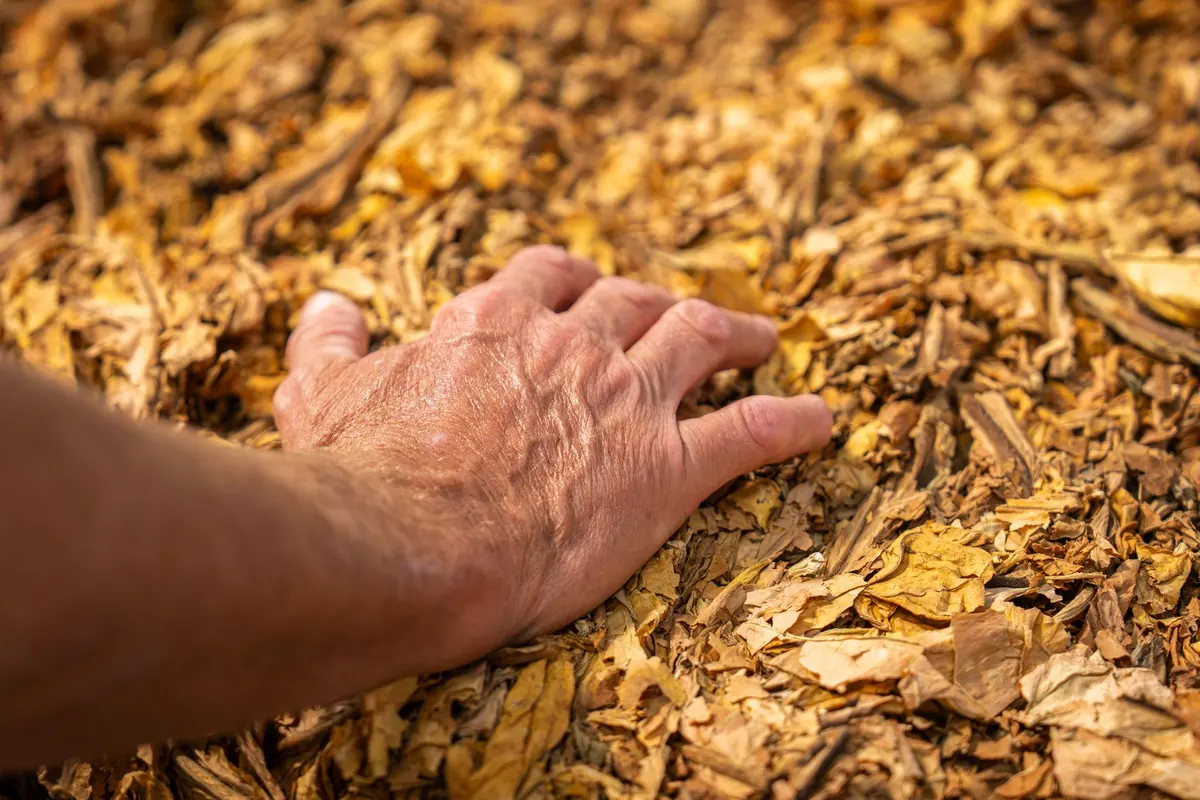
Virginia is flue-cured: the leaf is heated in a closed barn, which locks in its natural sugars. Colour runs from lemon yellow through orange to deep red, and flavour follows the colour. A lemon Virginia tastes of hay, fresh bread and citrus peel. Red Virginia is darker, with stewed fruit and a faint tang that some smokers describe as vinegar or ketchup. It is the most common base leaf in the pipe world, and the sweetest.
Two things are worth knowing before you buy a tin. First, all that sugar burns hot, so a straight Virginia will bite a fast smoker. Slow, shallow puffs are not a suggestion here; they are the difference between a sweet smoke and a sore tongue. Second, Virginia ages well. Sugars and acids mellow slowly in the tin, so a flake set aside for a few years often tastes rounder and deeper than the same blend fresh. If you learn only one leaf properly, learn this one.
Burley: Nuts, Cocoa and a Cool Burn
Burley is air-cured, which leaves it with almost no sugar and a very different character: nuts, cocoa, oats, a little earth, sometimes a whiff of cigar. It does not sing on its own the way Virginia does, but it is a superb team player. Because it is low in sugar it burns cool and steady, and it takes flavourings better than any other leaf — which is why so many aromatics are built on a burley base.
It also tends to carry more nicotine than most Virginias, so if you are new to the pipe, treat a strong burley blend with respect. Push it too hard and it turns ashy rather than nutty. Traditional American pouch mixtures are usually Virginia-and-burley combos, and they remain one of the friendliest places to begin.
Latakia: A Little Goes a Long Way
Latakia is the one everybody notices. The leaf is fire-cured over smouldering aromatic woods and herbs, and it emerges smelling of campfire, leather, incense and smoked cheese rind. In a blend it acts as a condiment rather than a meal — often five to twenty-five per cent — and that is usually plenty. A little adds depth and a savoury, smoky spine; too much and everything else disappears behind it.
Two practical notes. Latakia is loud enough to ghost a briar, leaving its mark in the wood for the next dozen bowls, so many smokers keep a dedicated pipe or a cheap cob for it. And whereas Virginia improves with time, many smokers find Latakia fades with age. If you love it, smoke it rather than cellaring it for a decade.
The Supporting Cast
Beyond the big three, a handful of leaves do quiet, useful work:
- Oriental (also sold as Turkish): sun-cured, small-leaved and dry, with notes of cedar, herbs, spice and dried apricot. It sharpens a blend and gives it a savoury edge.
- Perique: grown in Louisiana and fermented under pressure, this is dark, peppery and fruity — figs, plums, stewed fruit. Blenders use it in pinches, often five to fifteen per cent.
- Dark Fired Kentucky: cured over smoke like Latakia, but stronger and more barbecue than incense. Used sparingly for body and backbone.
- Cavendish: not a leaf at all, but a process. Tobacco is steamed and pressed, sometimes sweetened, and the result is mild and smooth — the black cavendish you see in aromatic blends.
- Maryland: mild, neutral and clean-burning, used to soften a mixture without shouting.
How a Blend Is Built
Nearly every mixture on the shelf is a base plus a condiment. Once you can spot the base, the tin description starts making sense.
Virginia and burley
Virginia and burley together give sweetness and body. Add a pinch of Perique and you have the classic Virginia-Perique, one of the most rewarding corners of the hobby.
English and Balkan
English blends are Virginia, Oriental and Latakia, usually with no flavouring added. Balkan mixtures push the Orientals forward, so the smoke is drier, spicier and less sweet. Scottish blends sit nearby, generally softened with a little cavendish.
Aromatics
Aromatic blends are built on burley or cavendish and topped with vanilla, cherry, whisky or rum. They smell wonderful in the tin. In the mouth the flavour is often gentler than the aroma promises, which surprises new smokers. That is not a fault; it is simply how toppings behave.
Cut matters too — flake, ribbon, plug and rope all burn differently — but cut changes the pace of a smoke, not its family.
A Sensible First Order
Buy four small tins rather than one large one, and work through them in this order:
- A straight Virginia, either flake or ready-rubbed.
- A mild English or Scottish blend with a modest Latakia content.
- A Virginia-Perique.
- An aromatic with a burley or cavendish base.
Smoke them in separate pipes or cobs if you can, otherwise the Latakia will follow you around. Take rough notes on the first third, the middle and the end of each bowl; flavours shift as you work down.
A few habits make a bigger difference than any tin you buy. Dry the tobacco until it springs back when pinched — most blends arrive too moist. Pack looser than feels natural: the draw should feel like sipping through a straw, not a milkshake. Smoke slowly enough that the bowl stays comfortable against your cheek. Give each blend two or three bowls before you judge it, because technique changes everything, and jar anything you open in an airtight container away from light.
One last thing worth saying plainly: pipe tobacco is not a safe alternative to cigarettes. All tobacco use carries real health risks, including cancers, heart disease and lung disease, and no blend is a harmless one. If you smoke and want to stop, your GP or pharmacist can point you towards proper support.
Photo: Mark Stebnicki / Pexels